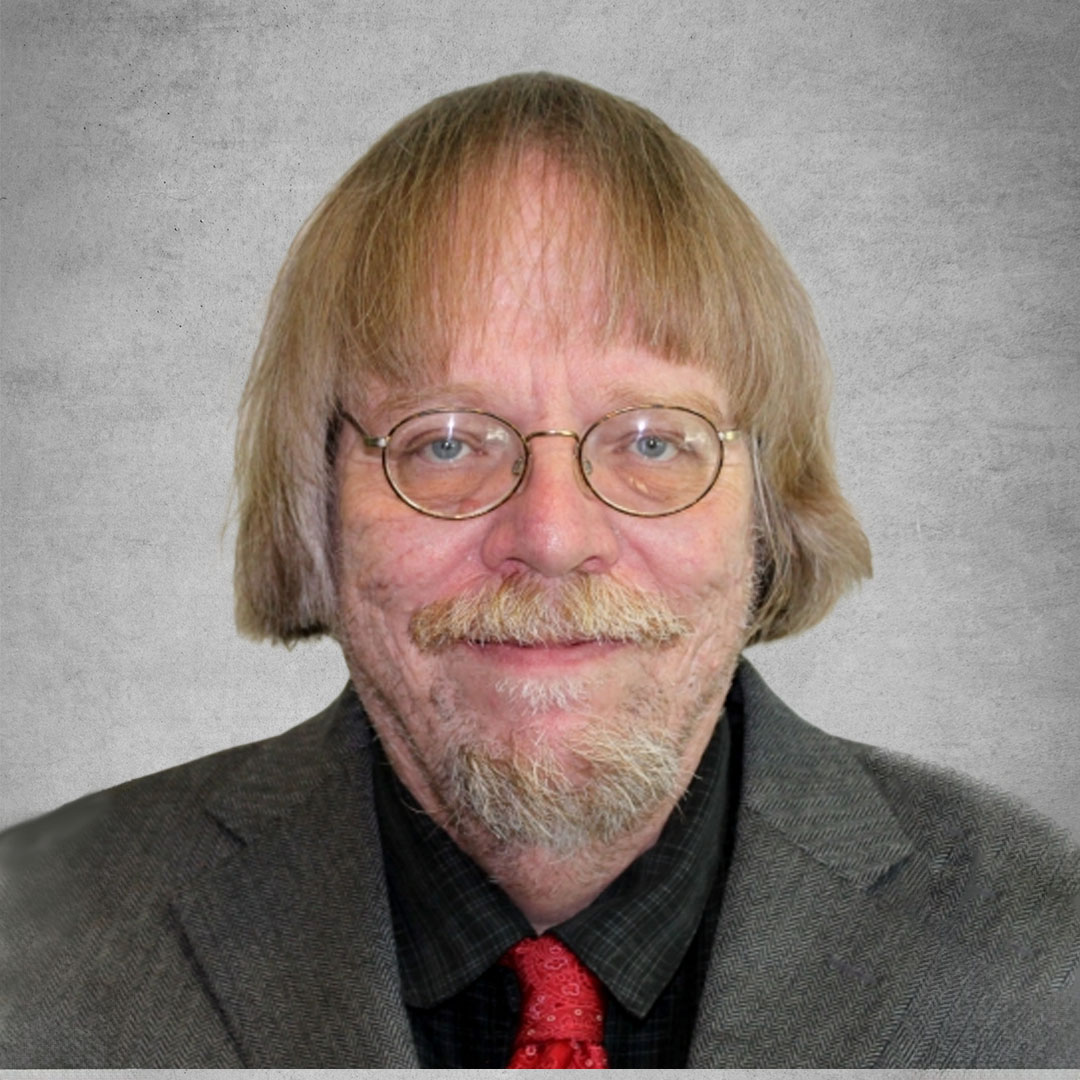
- WilliamAcreeDrJr.Professor – Analytical ChemistryAssociate Chair and Graduate AdvisorPhDFacultyacree@unt.edu(940) 565-3543
 CHEM 162FacultyUNT Faculty Profile Link
Dr. Acree received his B.S. in 1975, his M.Sc. in 1977 and his Ph.D. in 1981, all from the University of Missouri-Rolla. He was a postdoctoral fellow at the University of Kansas in 1980. After teaching at Kent State University for 6 years, he joined the UNT faculty in 1988. Dr. Acree was a co-Editor of the Journal of Chemical Thermodynamics, and is a Fellow of both The Royal Society of Chemistry and the International Union of Pure and Applied Chemistry.
Research Area:
Analytical Chemistry
Research
Development of expressions for determining solute-solvent association constants from measured solute solubility and chromatographic retention times in binary solvent mixtures.
Design of gas chromatographic probe methods for investigating properties of binary nematic liquid crystalline stationary phases.
Characterization of room temperature ionic liquids using various chromatographic and spectrophotometric probe methods.
Development of linear free energy relationships to describe solute partitioning between immiscible liquid phases.
Development of experimental methodology for obtaining solute descriptors from measured partitioning and chromatographic retention data.
Development of linear free energy relationships to describe properties of chemical, biological and pharmaceutical importance.
Research Description (pdf)
Practice Exams
1410 - 1st Exam
1410 - 2nd Exam
1410 - 3rd Exam
1410 - 4th Exam
1420 - 1st Exam
1420 - 2nd Exam
1420 - 3rd Exam
1420 - 4th Exam
1420 - Questions on Electrochemistry and Nuclear Chemistry
Organic Nomenclature
Electrochemistry
Oxidation - Reduction Equations
CHEM 162FacultyUNT Faculty Profile Link
Dr. Acree received his B.S. in 1975, his M.Sc. in 1977 and his Ph.D. in 1981, all from the University of Missouri-Rolla. He was a postdoctoral fellow at the University of Kansas in 1980. After teaching at Kent State University for 6 years, he joined the UNT faculty in 1988. Dr. Acree was a co-Editor of the Journal of Chemical Thermodynamics, and is a Fellow of both The Royal Society of Chemistry and the International Union of Pure and Applied Chemistry.
Research Area:
Analytical Chemistry
Research
Development of expressions for determining solute-solvent association constants from measured solute solubility and chromatographic retention times in binary solvent mixtures.
Design of gas chromatographic probe methods for investigating properties of binary nematic liquid crystalline stationary phases.
Characterization of room temperature ionic liquids using various chromatographic and spectrophotometric probe methods.
Development of linear free energy relationships to describe solute partitioning between immiscible liquid phases.
Development of experimental methodology for obtaining solute descriptors from measured partitioning and chromatographic retention data.
Development of linear free energy relationships to describe properties of chemical, biological and pharmaceutical importance.
Research Description (pdf)
Practice Exams
1410 - 1st Exam
1410 - 2nd Exam
1410 - 3rd Exam
1410 - 4th Exam
1420 - 1st Exam
1420 - 2nd Exam
1420 - 3rd Exam
1420 - 4th Exam
1420 - Questions on Electrochemistry and Nuclear Chemistry
Organic Nomenclature
Electrochemistry
Oxidation - Reduction Equations